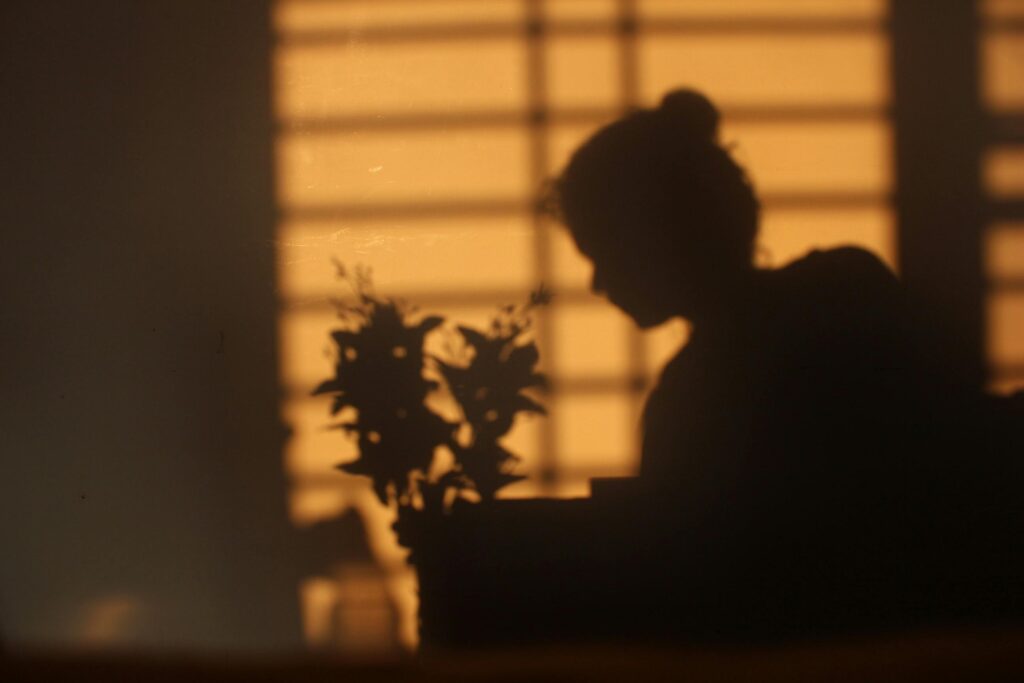
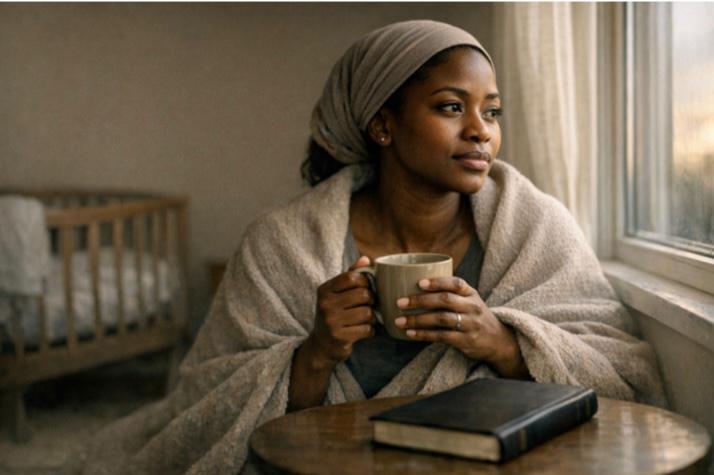
The night my faith broke did not sound dramatic. It sounded like a baby breathing in a dark
room.
I remember sitting on the edge of my bed, shoulders stiff, a half-folded onesie in my lap, staring at the wall as if it might answer me. I had survived rape. I had carried the pregnancy. I had given birth. People called me strong, but inside I felt like dust and static, too numb to cry, too angry to pray, too ashamed to be held by God.
I did not lose faith all at once. It leaked out of me, slowly, like water from a cracked bowl.
When Survival Feels Like Disappearing
After the assault, my life split in two: before, and after. In the after, I moved through days like a stranger inside my own skin. Loud footsteps behind me made my heart race. The smell of certain colognes, a slammed door, night time silence, everything could become a trigger. I was startled easily. I slept badly. I checked locks twice, then three times. Even in church, I sat near the exit.
Shame became my native language. I blamed myself for things that were never mine to carry. I questioned every memory, every choice, every signal my body had sent. My body no longer felt like home; it felt like a place where something terrible had happened, and I did not know how to live there anymore.
Spiritually, I was worse than empty. I was offended by God.
People said, “He’s still good.” I wanted to ask, Then where was He? Prayer dried up in my
throat. Worship songs sounded like they belonged to other people. I did not feel pure, and
because I did not feel pure, I stopped believing I was lovable. Not just by people but by God.
The baby was there, yes. Small hands. Milk-warm skin. Midnight cries. But let me say this
carefully: my child was never the reason that violence happened, never a neat explanation,
never God’s excuse for evil. Human sin did what sin does: it harmed. And I was left standing in the wreckage, trying to breathe.

The Ways I Tried Not to Feel
I wish I could say I ran straight into healing. I did not.
I ran into coping.
First it was alcohol, because it blurred the edges. It softened the hypervigilance and quieted the film reel in my head. Then came compulsive sex, not from desire, but from damage. I was trying to outrun pain by proving I could still choose something, control something, feel something. For a short season, drugs entered the picture too. Not heavily, not long, but long enough to deepen the spiral.
None of it healed me. It only postponed the crash.
I lived divided: caring for my baby in practical ways, while emotionally drifting farther from myself. Some days I felt crushing anxiety; other days I felt absolutely nothing. Depression sat on my chest like concrete. Isolation became easier than trust. I stopped answering calls. I smiled when necessary. I lied when asked how I was doing.
And still, somewhere under all the ash, a tiny stubborn part of me wanted to live.
The Night Mercy Interrupted Me
My turning point did not come in a church service. It came on an ordinary night that almost
became a tragedy. I had been drinking. Too much. My mind was foggy, my body heavy, and I was not making safe choices. I remember the sharp smell of rain through a cracked window, streetlights smearing gold across the glass, my now toddler asleep in the next room. I remember reaching for one more escape from myself.
Then everything in me went cold.
I cannot explain it neatly. There are moments when language feels too small. I only know this: what could have happened did not happen. Help came too quickly. A sequence of events shifted in a way I could never have arranged. The danger closed in and then, somehow, it passed me by.
I sat on the floor afterward, shaking so hard my teeth clicked. And the only thought in my head was one my friend would later say aloud, tears in her eyes: “na God use him hand save this one by himself.”
That was exactly how it felt.
Not because I had earned rescue. Not because I had been good. Not because addiction had
made me disposable and God decided at the last minute to keep me. No. It felt like sheer mercy. Like God reached into a place I could not climb out of and said, Not tonight. You are still Mine.
For the first time in a long time, I did not offer God polished words. I offered Him the truth.
“Help me.”
That was my first real prayer.
Learning the Difference Between God and Evil
The first steps back to faith were small and unimpressive. I poured out alcohol. I called one safe person. I told the truth in fragments. I found a Christian counselor who did not rush me, did not spiritualize my trauma, did not confuse silence with healing. I began attending church again, sometimes leaving early, sometimes crying in the car afterward.
I had to learn, slowly, that God’s heart was not the same as what had been done to me.
This mattered. Deeply.
Because for a long time, I had tangled God up with violence, as if His sovereignty meant He had authored my violation. But human evil is not God’s will. The Lord does not need abuse to write a testimony. He is present in suffering without being the source of the sin that caused it.
Psalm 34:18 became a lifeline: *“The Lord is near to the brokenhearted.”* Near! Not far, not
disgusted, not disappointed. Near.
I learned to lament. Not perform faith, but tell the truth inside faith. Some prayers were
accusations. Some were sobs. Some were silent. And still God stayed.
Isaiah 61 began to sound less like a slogan and more like a promise I could borrow: that He
comes to bind up the brokenhearted, to bring beauty from ashes, not by pretending the ashes are beautiful, but by refusing to leave us buried in them.
Healing That Happens in Layers
My healing was not instant. It is still not instant.
Sobriety came in decisions, not declarations. Boundaries felt awkward before they felt holy.
Accountability was humbling. There were relapses in emotion, if not always in behavior, days
when shame returned, when triggers knocked the wind out of me, when trust felt impossible. Recovery was not a straight line; it was more like learning to walk with a limp and discovering that even limping people can move forward.
My child became part of that healing, but gently, quietly. Not as a “silver lining.” Not as a reason for the rape. Never that. But in the ordinary rhythm of caring for another life, I began to notice I was still capable of tenderness. Still capable of staying. Still capable of love that had not been ruined.
And somewhere in that long middle, God began restoring my identity. Psalm 147:3 says,
“He heals the brokenhearted and binds up their wounds.”
Binds up: like a careful dressing, changed again and again. Not rushed. Not rough.
Even Romans 8:28 had to be handled with trembling. I could not accept it as “everything
happens for a reason.” No. Evil is evil. But I began to understand that God can work within what He hates, bringing redemption without ever calling the harm good.
Joel 2:25 gave me language for what I did not think was possible: restoration. Not erased. Not pretending. But real, sacred rebuilding.
As we say at home sometimes, na only God fit carry person from pit like that.
What I Want You to Know
If you are a survivor, hear me: what happened to you was not your fault. Your fear makes sense. Your anger makes sense. Your numbness, your grief, your distrust, the way your body
sometimes feels far away, these are not signs that you are weak or faithless. They are wounds.
And wounds deserve care.
God is not asking you to heal quickly to prove you trust Him. He is not measuring your worth by your purity, your composure, or how well you hide the pain. You have dignity right now. You deserve safety right now. You are not disqualified from love, from church, from prayer, or from recovery.
Healing may look like therapy. It may look like telling one trustworthy friend. It may look like
getting sober one day at a time, finding accountability, learning boundaries, leaving unsafe
environments, or whispering one honest prayer after months of silence.
That counts. It all counts.
God met me in a place so dark I thought I was gone for good. And He did not shame me back to life. He loved me there. Slowly, truthfully, patiently.
If you’re reading this and your heart feels tired, please know: you do not have to heal alone.
Reach out and let us know if you need immediate help. There is no shame in needing care.
There is hope for you; steady, tender, and real.